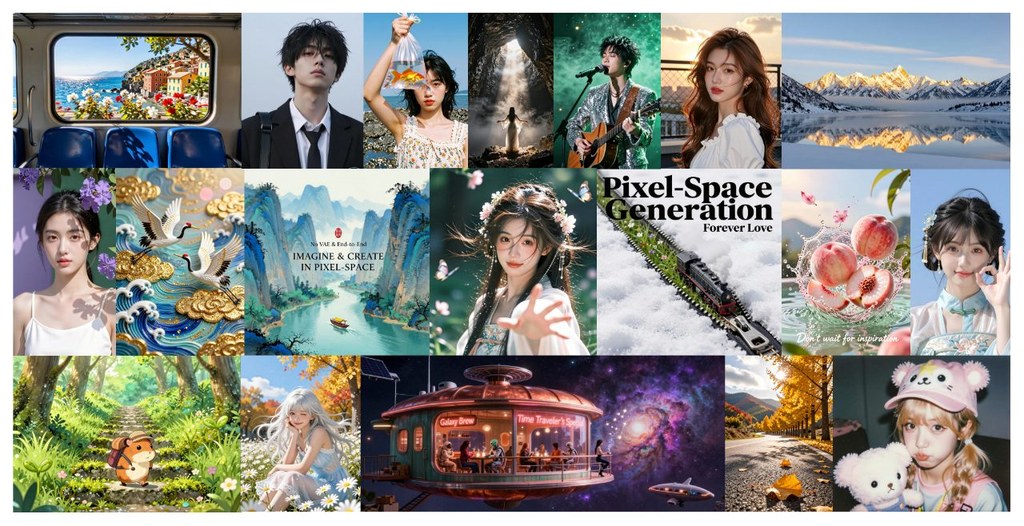
上圖是透過 pixel-space text-to-image diffusion models 的方法訓練的 Z-Image-Turbo (Pixel) 產生的圖像。在企業級 H800 GPU 上,推理延遲僅約 0.2 秒。
Pixel-space text-to-image diffusion models 一直有兩個吸引位:直接生成像素,唔受 VAE 壓縮上限限制,亦可以省去解碼步驟。但喺大規模訓練下,佢哋收斂速度明顯慢過 latent-space 模型,令「畫質、效率、可訓練性」三者之間嘅平衡一直唔夠成熟。
呢篇工作針對嘅正係呢個落差。作者先比較 pixel-space 同 latent-space 喺大規模 pre-training 下嘅行為,再提出 latent-to-pixel 策略:先喺 latent space 學到生成先驗,再轉去 pixel space 做 post-training,避免一開始就喺難度更高嘅像素空間硬推。
佢哋亦系統研究咗多個轉換設計,包括 weight initialization、data composition、prediction target、decoder architecture 同 noise schedule,整理出一套可行做法。結果顯示,做法調整得當之後,pixel-space 模型可以追平甚至超過 latent-space 對應模型,推理端仲有 3.18 到 4.75 倍嘅速度提升。
- 直接處理 pixel-space diffusion models 喺大規模訓練時收斂慢嘅問題
- 用 latent-to-pixel 路線,先學先驗,再轉入像素空間微調
- 檢視多個關鍵訓練選項,搵出實用 recipe
- 在畫質不退讓之下,換取更快的 end-to-end inference
- 對想做高效文生圖系統、又在意生成細節保留嘅團隊最有參考價值